She Was Enslaved, Abused, and Cast Out—Yet God Spoke Her Name First
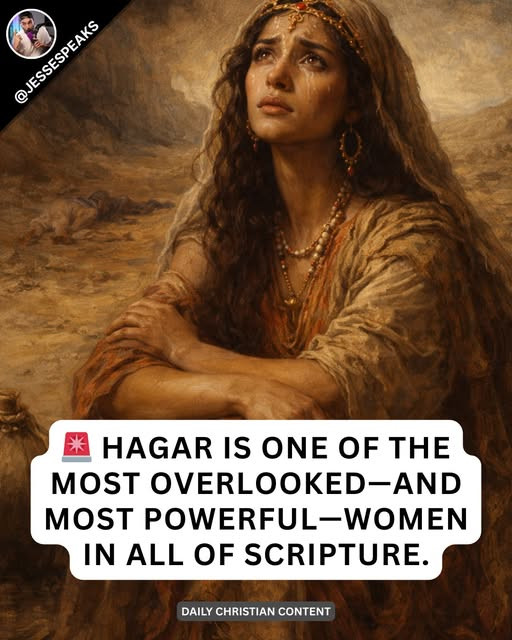
Hagar is one of the most overlooked—and most powerful—women in all of Scripture.
She was not a queen.
She was not an Israelite.
She was not free.
Hagar was an enslaved Egyptian woman, used as a means to an end, caught in the middle of Abraham and Sarah’s lack of faith. When she became pregnant, jealousy and abuse followed. Scripture says she was mistreated—so severely that she ran into the wilderness to escape it (Genesis 16).
And that is where everything changes.
Alone in the desert, with no protection, no status, and no future, God Himself seeks her out. Not Abraham. Not Sarah. God.
The Angel of the Lord speaks to her—and does something unprecedented.
Hagar is one of the most overlooked—and most powerful—women in all of Scripture.
She was not a queen.
She was not an Israelite.
She was not free.
Hagar was an enslaved Egyptian woman, used as a means to an end, caught in the middle of Abraham and Sarah’s lack of faith. When she became pregnant, jealousy and abuse followed. Scripture says she was mistreated—so severely that she ran into the wilderness to escape it (Genesis 16).
And that is where everything changes.
Alone in the desert, with no protection, no status, and no future, God Himself seeks her out. Not Abraham. Not Sarah. God.
The Angel of the Lord speaks to her—and does something unprecedented.
06:01 AM - Dec 31, 2025
Only people mentioned by myralynnr in this post can reply

Myra Raney
@myralynnr
31 December, 06:01
In response Myra Raney to her Publication
He calls her by name.
This makes Hagar the first person in the Bible God ever personally addressed by name. Not a patriarch. Not a prophet. An enslaved, abused foreign woman.
And Hagar does something just as astonishing.
She names God.
“You are the God who sees me,” she says—El Roi (Genesis 16:13).
The first human in Scripture to give God a name is not a priest or king, but a woman the world discarded.
God sees her suffering.
God promises her a future.
God protects her and her child.
Later, when Hagar is cast out again with her son Ishmael and left to die in the wilderness, God hears the cries of a child everyone else had written off (Genesis 21). He opens her eyes to a well she could not see—and once again proves that His presence is not limited to privilege, bloodline, or status.
This makes Hagar the first person in the Bible God ever personally addressed by name. Not a patriarch. Not a prophet. An enslaved, abused foreign woman.
And Hagar does something just as astonishing.
She names God.
“You are the God who sees me,” she says—El Roi (Genesis 16:13).
The first human in Scripture to give God a name is not a priest or king, but a woman the world discarded.
God sees her suffering.
God promises her a future.
God protects her and her child.
Later, when Hagar is cast out again with her son Ishmael and left to die in the wilderness, God hears the cries of a child everyone else had written off (Genesis 21). He opens her eyes to a well she could not see—and once again proves that His presence is not limited to privilege, bloodline, or status.
Notice: Undefined index: tg1tga_access in /home/admin/www/anonup.com/themes/default/apps/timeline/post.phtml on line 396
Myra Raney
@myralynnr
31 December, 06:01
In response Myra Raney to her Publication
Hagar’s story exposes a truth many miss:
God does not only work through the powerful.
He does not only speak to the chosen elite.
He does not ignore the abused, the foreigner, the outcast, or the forgotten.
Hagar reminds us that God sees what people overlook.
He hears cries no one else listens to.
And He writes redemption stories that begin in injustice.
Her story is uncomfortable.
It confronts systems, power, and misuse of authority.
And it proves that God’s grace often shows up first where we least expect it.
Hagar was not invisible to God—
and neither is anyone the world has tried to erase.
God does not only work through the powerful.
He does not only speak to the chosen elite.
He does not ignore the abused, the foreigner, the outcast, or the forgotten.
Hagar reminds us that God sees what people overlook.
He hears cries no one else listens to.
And He writes redemption stories that begin in injustice.
Her story is uncomfortable.
It confronts systems, power, and misuse of authority.
And it proves that God’s grace often shows up first where we least expect it.
Hagar was not invisible to God—
and neither is anyone the world has tried to erase.
Notice: Undefined index: tg1tga_access in /home/admin/www/anonup.com/themes/default/apps/timeline/post.phtml on line 396