When Ancient Empires Accidentally Proved the Bible True
For decades, skeptics claimed the Bible was mythological—religious poetry with no grounding in real history. Then archaeology kept getting in the way.
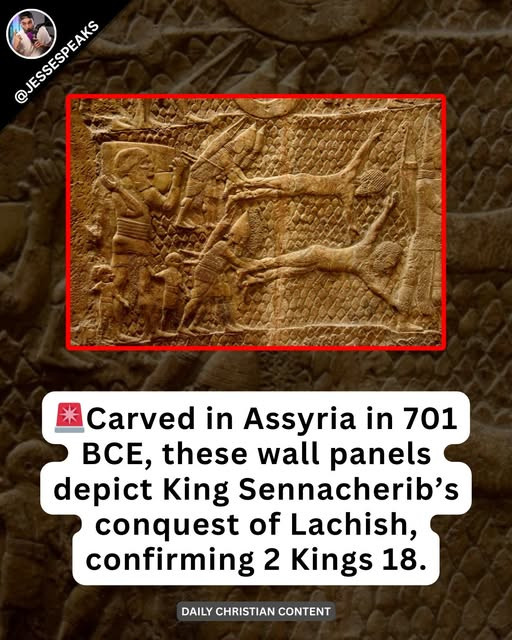
Carved into stone nearly 2,700 years ago, Assyrian wall panels from 701 BCE depict King Sennacherib’s siege of Lachish, one of Judah’s fortified cities. These reliefs are not biblical artifacts. They were propaganda—boasts carved by Israel’s enemies.
And that’s exactly why they matter.
The Bible records this same event in 2 Kings 18, describing Sennacherib’s campaign against Judah during the reign of King Hezekiah. The Assyrian carvings show the city’s fall, captives taken, and tribute extracted—precisely what Scripture says happened at Lachish.
For decades, skeptics claimed the Bible was mythological—religious poetry with no grounding in real history. Then archaeology kept getting in the way.
Carved into stone nearly 2,700 years ago, Assyrian wall panels from 701 BCE depict King Sennacherib’s siege of Lachish, one of Judah’s fortified cities. These reliefs are not biblical artifacts. They were propaganda—boasts carved by Israel’s enemies.
And that’s exactly why they matter.
The Bible records this same event in 2 Kings 18, describing Sennacherib’s campaign against Judah during the reign of King Hezekiah. The Assyrian carvings show the city’s fall, captives taken, and tribute extracted—precisely what Scripture says happened at Lachish.
05:15 AM - Dec 29, 2025
Only people mentioned by myralynnr in this post can reply

Myra Raney
@myralynnr
29 December, 05:15
In response Myra Raney to her Publication
What the panels don’t show is just as telling.
They never depict the conquest of Jerusalem.
Why? Because according to 2 Kings 19, Jerusalem didn’t fall. Scripture says God intervened, and the Assyrian army was miraculously stopped. The Assyrians recorded every victory—but remained silent about their failure at Jerusalem.
That silence is deafening.
These carvings weren’t made to confirm the Bible. They were made to glorify Assyria. Yet they end up doing what critics said was impossible: anchoring Scripture in verifiable history.
This isn’t blind faith. It’s inconvenient evidence.
Modern culture prefers a God who exists only in metaphor. But the God of the Bible operates in real time, real places, and real history—sometimes leaving His fingerprints in the archives of His enemies.
You can argue theology all day.
But stone doesn’t lie.
And history keeps confirming what Scripture has said all along.
They never depict the conquest of Jerusalem.
Why? Because according to 2 Kings 19, Jerusalem didn’t fall. Scripture says God intervened, and the Assyrian army was miraculously stopped. The Assyrians recorded every victory—but remained silent about their failure at Jerusalem.
That silence is deafening.
These carvings weren’t made to confirm the Bible. They were made to glorify Assyria. Yet they end up doing what critics said was impossible: anchoring Scripture in verifiable history.
This isn’t blind faith. It’s inconvenient evidence.
Modern culture prefers a God who exists only in metaphor. But the God of the Bible operates in real time, real places, and real history—sometimes leaving His fingerprints in the archives of His enemies.
You can argue theology all day.
But stone doesn’t lie.
And history keeps confirming what Scripture has said all along.
Notice: Undefined index: tg1tga_access in /home/admin/www/anonup.com/themes/default/apps/timeline/post.phtml on line 396