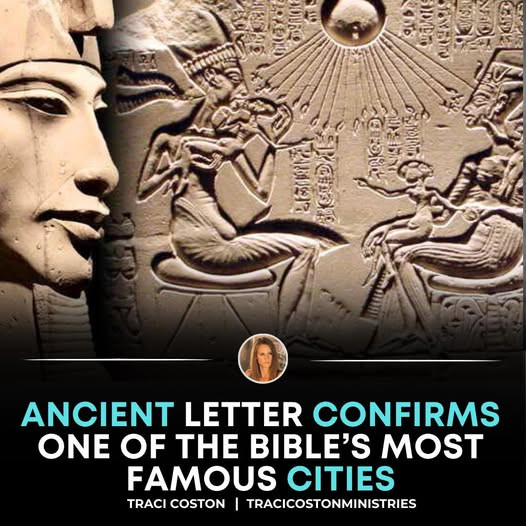
Archaeologists studying clay tablets from the reign of Pharaoh Akhenaten uncovered a stunning confirmation of Scripture and ancient history. These Amarna Letters reveal that the city known today as Jerusalem was once called Urusalim, meaning “the kingdom of Salem” — exactly as hinted in Genesis 14:18, where Jerusalem is referred to as “Salem.”
One letter, written by a vassal named Abdi-Heba, begs the Pharaoh for military help against rebellious city-states and mentions:
• Urusalim (Jerusalem) was a royal gift from the Pharaoh himself, confirming biblical claims of ancient royal influence over the city.
• The letter mentions Milkilu, believed to be Melki-Tzedek (Melchizedek), the priest-king from Abraham’s time, showing how biblical figures connect to recorded history.
One letter, written by a vassal named Abdi-Heba, begs the Pharaoh for military help against rebellious city-states and mentions:
• Urusalim (Jerusalem) was a royal gift from the Pharaoh himself, confirming biblical claims of ancient royal influence over the city.
• The letter mentions Milkilu, believed to be Melki-Tzedek (Melchizedek), the priest-king from Abraham’s time, showing how biblical figures connect to recorded history.
03:19 AM - Jan 03, 2026
Only people mentioned by myralynnr in this post can reply

Myra Raney
@myralynnr
03 January, 03:20
In response Myra Raney to her Publication
• It warns of the ‘Apiru’—a group many scholars link to the Hebrews—who were trying to reclaim territories, matching the Bible’s account of the Hebrews’ early struggles in Canaan.
• The letter references the political chaos and shifting alliances that also echo the tragic Shechem incident recorded in Genesis 34.
These tablets not only prove Jerusalem’s ancient name and political importance but also tie directly into the biblical narrative of the patriarchs and early Hebrew history. Archaeology has once again done what it always does: catch up to the Bible!
• The letter references the political chaos and shifting alliances that also echo the tragic Shechem incident recorded in Genesis 34.
These tablets not only prove Jerusalem’s ancient name and political importance but also tie directly into the biblical narrative of the patriarchs and early Hebrew history. Archaeology has once again done what it always does: catch up to the Bible!
Notice: Undefined index: tg1tga_access in /home/admin/www/anonup.com/themes/default/apps/timeline/post.phtml on line 396